
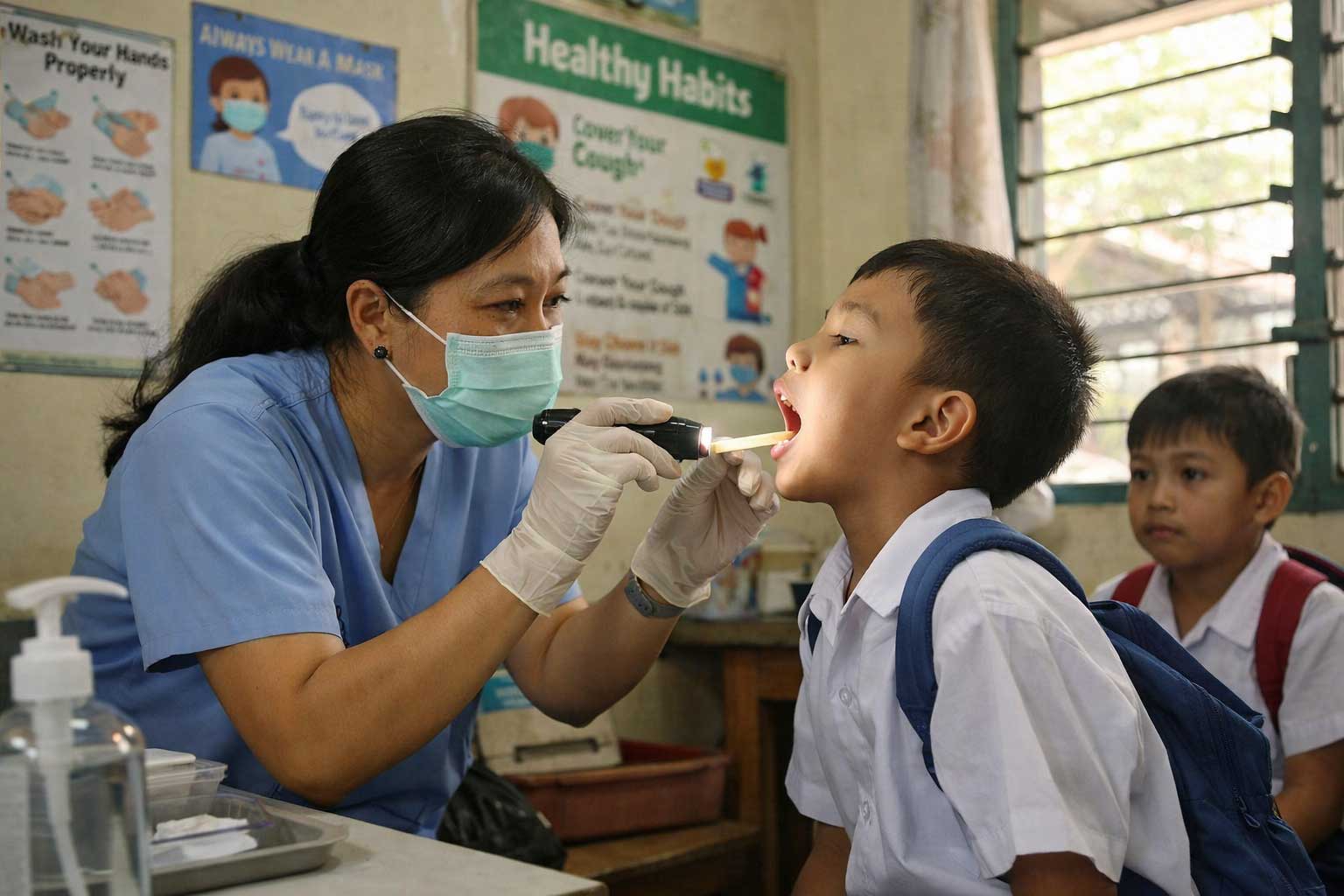
DOH Warns of Rising Herpangina and Enterovirus Cases in Schools
MANILA, Philippines — The Department of Health (DOH) has directed regional health offices and school authorities to intensify surveillance following a noted increase in enterovirus-related infections, specifically herpangina, among school-aged children. The advisory comes as the department monitors clustering of cases in several regions, including the National Capital Region (NCR) and Northern Mindanao, where local health units have reported an upward trend in mouth-sore-related illnesses as of early 2026.
According to the DOH Epidemiology Bureau, while many viral respiratory illnesses remain within seasonal expectations, the high transmissibility of enteroviruses in group settings has prompted a proactive response from the Bureau of Quarantine and the Department of Education (DepEd). Health officials emphasized that herpangina, characterized by painful ulcers in the back of the throat, often peaks during transitions in school terms when child-to-child contact is most frequent.
Key Developments in Enterovirus Monitoring
Data from the DOH indicated that enterovirus detections, which include both herpangina and Hand, Foot, and Mouth Disease (HFMD), have seen localized spikes. In Northern Mindanao (Region 10), health education promotions head Dr. Maryanne Sharlene Isidro confirmed an “upward trend” in cases, particularly affecting children below five years old, though older children have also been infected.
“The transmission is fast because the virus persists on surfaces and spreads through respiratory droplets or the fecal-oral route,” the DOH noted in its recent situation bulletins. Under the Mandatory Reporting of Notifiable Diseases Act (Republic Act No. 11332), local government units (LGUs) are now required to report clusters of more than three symptomatic learners in a single classroom to the regional Epidemiology and Surveillance Units (RESU).
DOH Spokesperson Assistant Secretary Dr. Albert Domingo recently clarified that while the department is focusing on “Bakuna Eskwela” for vaccine-preventable diseases, illnesses like herpangina—for which no vaccine exists—must be managed through “non-pharmaceutical interventions” such as rigorous handwashing and surface disinfection.
Why It Matters
The surge in herpangina cases has significant implications for both public health and the national education system. Unlike typical colds, herpangina causes high-grade fever and throat ulcers that can lead to severe dehydration in young children who refuse to swallow fluids.
From a policy perspective, the DOH’s focus on enterovirus surveillance reflects a broader strategy of “PinaSiglang 2026,” which prioritizes school-based health to prevent system-wide outbreaks. Economically, widespread school absenteeism forces parents to miss work, creating a ripple effect on household productivity. Furthermore, the DOH must balance its resources between managing these common viral surges and monitoring more severe threats, such as the Nipah virus, which President Ferdinand Marcos Jr. recently ordered the Bureau of Quarantine to monitor strictly at national borders.
Background and Clinical Context
Herpangina is caused by the Enterovirus genus, most commonly Coxsackievirus A. It is frequently confused with HFMD, but clinical guidelines provided by the DOH distinguish the two based on the location of the lesions:
- Herpangina: Ulcers are found exclusively on the soft palate, tonsils, and the back of the throat (posterior oropharynx).
- HFMD: Sores appear in the front of the mouth and are accompanied by a distinct rash on the palms and soles of the feet.
Health authorities reiterated that antibiotics are ineffective against these viruses. Treatment is purely supportive, focusing on pain management and hydration. The DOH strictly discourages the use of aspirin in children with viral fevers due to the risk of Reye’s Syndrome, recommending acetaminophen or ibuprofen instead.
Analysis
The current increase in cases suggests that the Philippines is facing a “rebound” of common childhood infections following the full resumption of face-to-face activities in 2025 and 2026. This trend may indicate that the “immunity gap” created during previous years of restricted social contact is still being bridged.
The DOH’s decision to integrate enterovirus monitoring into the regular school calendar suggests a shift toward institutionalizing hygiene as a core part of the education system. However, the lack of specific antivirals means that the burden of prevention falls heavily on local school boards and parents. This reliance on public compliance highlights a potential vulnerability in regions where access to clean water and sanitation facilities in schools remains inconsistent.
What Happens Next
The DOH is expected to release a consolidated morbidity report by the end of the first quarter of 2026 to determine if the surge warrants localized school closures. In the interim, the “Bakuna Eskwela” program will continue to run alongside enterovirus information campaigns to ensure that other preventable diseases, such as measles (which saw a 32% increase in previous periods), do not complicate the current viral landscape.
Health officials advise parents to monitor children for “red flag” symptoms, including a fever lasting more than three days, lethargy, or signs of dehydration, and to seek immediate consultation at the nearest Primary Care or BUCAS (Bagong Urgent Care and Ambulatory Service) Center.

Leave A Comment