
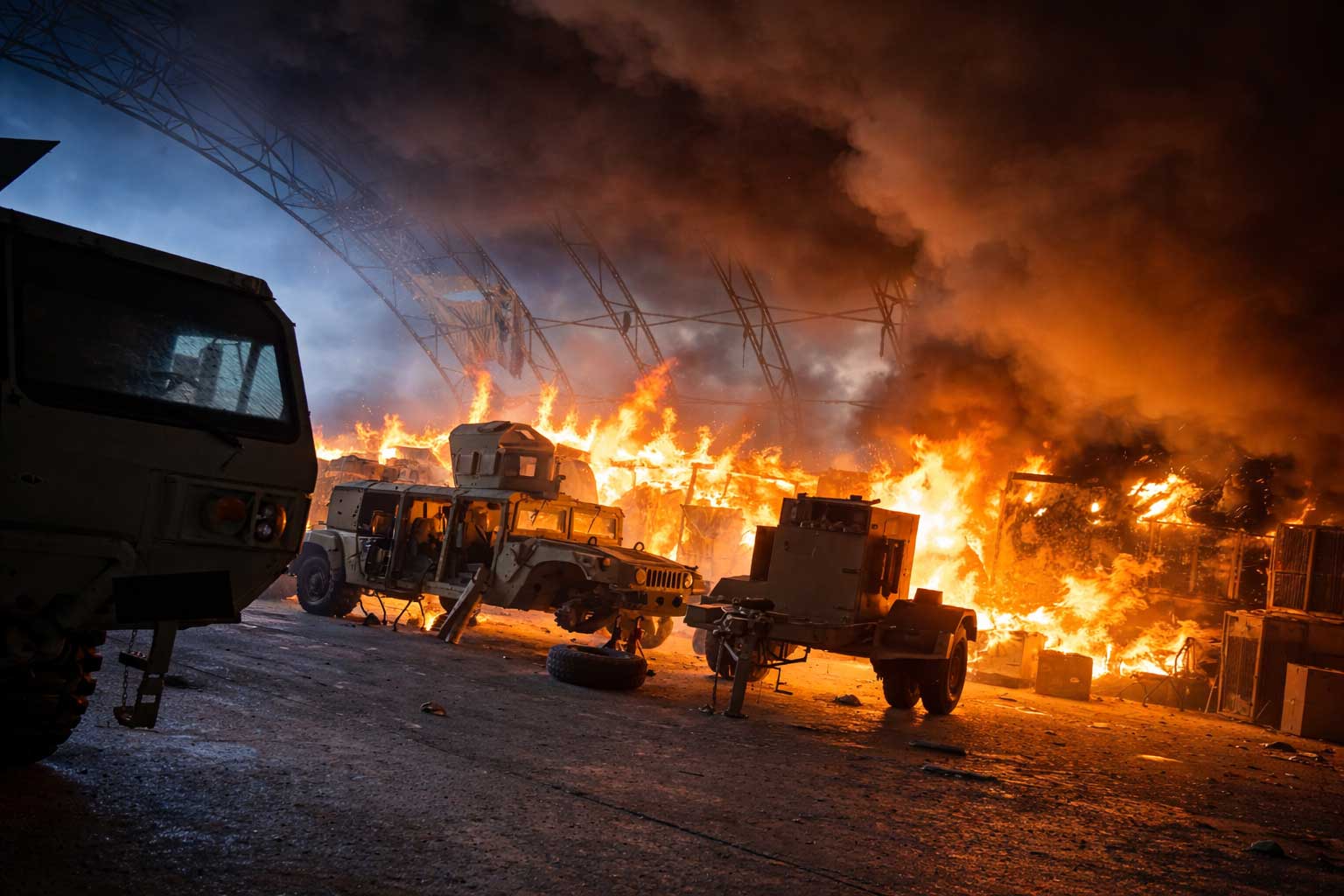
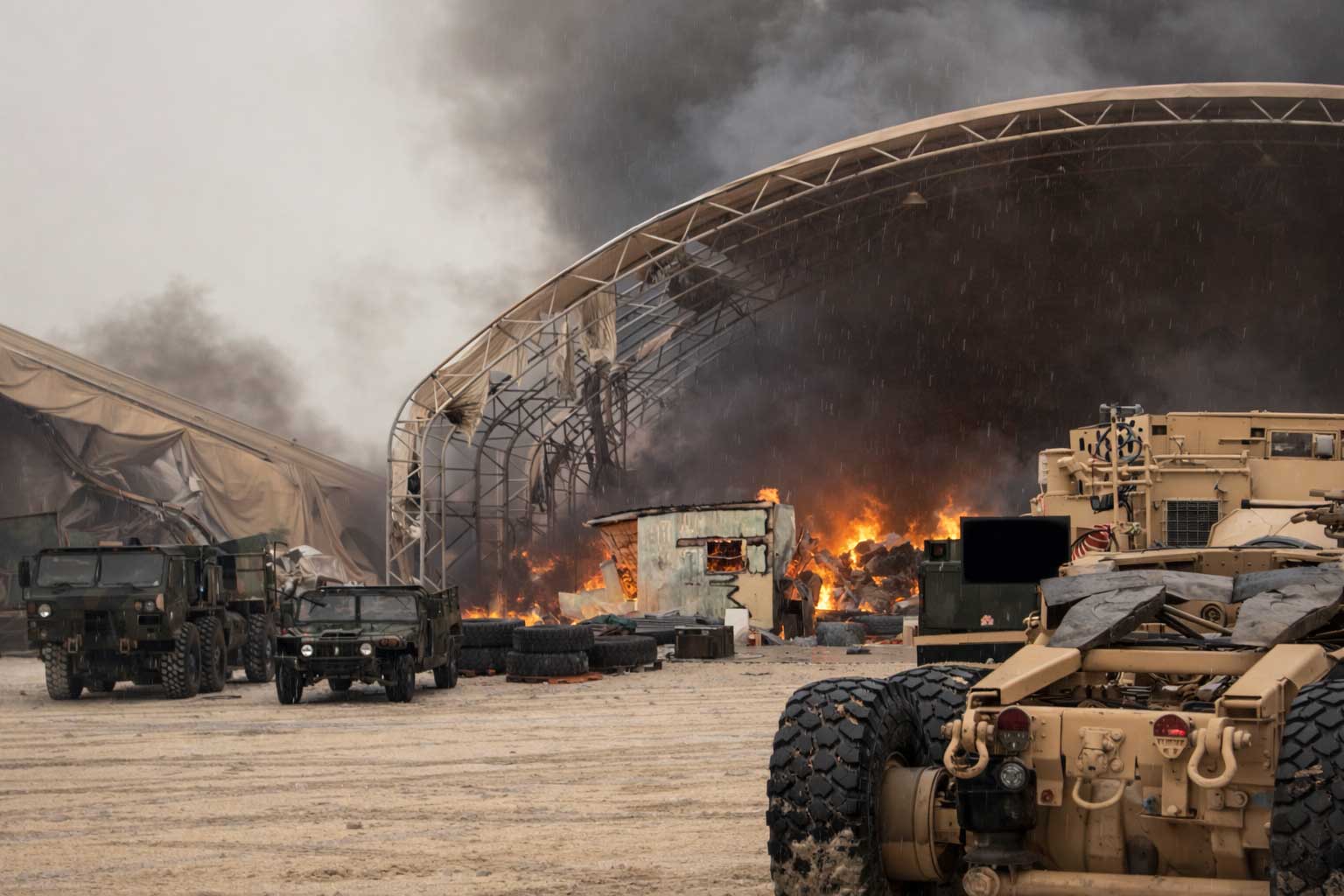
Iran has just dropped a bomb on the US base in the United Arab Emirates
ABU DHABI — The Islamic Republic of Iran has intensified its military campaign against United States assets in the Middle East, launching a series of missile and drone strikes targeting the Al Dhafra Air Base in the United Arab Emirates. The strikes, which occurred during the early hours of March 7, 2026, represent a significant escalation in a regional conflict that has expanded rapidly over the past week.
The Al Dhafra Air Base, located south of Abu Dhabi, serves as a primary hub for the U.S. Air Force’s 380th Air Expeditionary Wing. According to reports from the Emirates News Agency (WAM), UAE air defense units, including the Terminal High Altitude Area Defense (THAAD) and Patriot missile systems, successfully intercepted several incoming projectiles. However, local defense monitors reported multiple explosions near the facility’s perimeter and other strategic infrastructure.
Retaliation for “Operation Epic Fury”
The current wave of hostilities follows the initiation of Operation Epic Fury, a joint military offensive by the United States and Israel launched on February 28, 2026. According to the U.S. Department of State, the operation was designed to neutralize Iran’s nuclear capabilities and ballistic missile manufacturing sites. Official reports from regional media confirm that the initial U.S.-led strikes resulted in the death of senior Iranian leadership, including Supreme Leader Ayatollah Ali Khamenei.
In a televised address via the state-linked Fars News Agency, the Islamic Revolutionary Guard Corps (IRGC) justified the strikes on the UAE by claiming that regional bases were being utilized as launchpads for “illegal aggression” against Iranian sovereignty. The IRGC has officially declared all countries hosting U.S. military personnel as legitimate combat zones.
The UAE’s Ministry of Defence confirmed that since the start of the conflict, more than 1,000 drones and 200 ballistic missiles have been detected in Emirati airspace. While the majority have been neutralized, the persistent nature of the attacks has caused significant damage to civilian and commercial interests.
Impacts on Civilian Infrastructure
Beyond military installations, the conflict has disrupted the UAE’s reputation as a secure global hub. On Saturday, “incidents” involving falling debris and direct impacts were reported in urban centers. According to the Dubai Media Office, an Iranian drone strike caused a fire at the U.S. Consulate in Dubai earlier this week, though no casualties were reported in that specific incident.
Commercial aviation has been severely impacted. Dubai International Airport, one of the world’s busiest transit points, has faced intermittent closures. Carriers such as Emirates and Etihad Airways have canceled or rerouted hundreds of flights as airspace across the Persian Gulf remains restricted. The UAE government has also announced the temporary closure of schools and universities, moving spring break forward as a precautionary measure.
Regional and International Consequences
The escalation has sent shockwaves through global energy markets. With Iran threatening to close the Strait of Hormuz—through which 20% of the world’s petroleum passes—oil prices have surged, with some analysts predicting costs could reach $200 per barrel if the conflict persists.
In Washington, President Donald Trump has maintained a hardline stance, stating that the military campaign will continue “unabated” until the Iranian regime’s offensive capabilities are dismantled. Conversely, the Pentagon has expressed concern regarding the rapid depletion of defensive missile interceptors needed to counter the high volume of Iranian drone swarms.
Implications for the Philippines
The conflict is a major concern for the Philippine government due to the large population of Overseas Filipino Workers (OFWs) in the UAE. As of March 7, 2026, the Department of Foreign Affairs (DFA) in Manila has placed the region under high alert but has not yet ordered a mandatory evacuation.
“We are monitoring the situation in the UAE and the wider Gulf region very closely,” a DFA spokesperson said. “The safety of our nationals is the top priority, and we have contingency plans in place should the security situation deteriorate further.”
According to the Department of Migrant Workers (DMW), nearly 2,000 Filipinos in the Middle East have already requested assistance for repatriation since the outbreak of hostilities on February 28. Filipino citizens currently in the UAE have been advised to stay away from military installations and to register with the nearest Philippine Embassy or Consulate.
Background and Outlook
The current war follows the total collapse of diplomatic negotiations regarding Iran’s nuclear program in early 2026. Tensions peaked when the U.S. administration alleged an “imminent threat” of a ballistic missile launch from Iranian territory, prompting the preemptive strikes of Operation Epic Fury.
As of this afternoon, diplomatic efforts by Oman and Qatar to broker a ceasefire have reached an impasse. Both Tehran and Washington have rejected preliminary calls for a pause in hostilities, with Iran vowing “complete destruction” of regional adversaries and the U.S. insisting on a full dismantling of the IRGC’s infrastructure.
The UAE continues to assert its sovereign right to self-defense while publicly distancing itself from the offensive actions of the U.S. military. The federation’s Ministry of Foreign Affairs stated that the UAE “is not a party to this war” and urged the international community to intervene to prevent a total regional collapse.



Leave A Comment